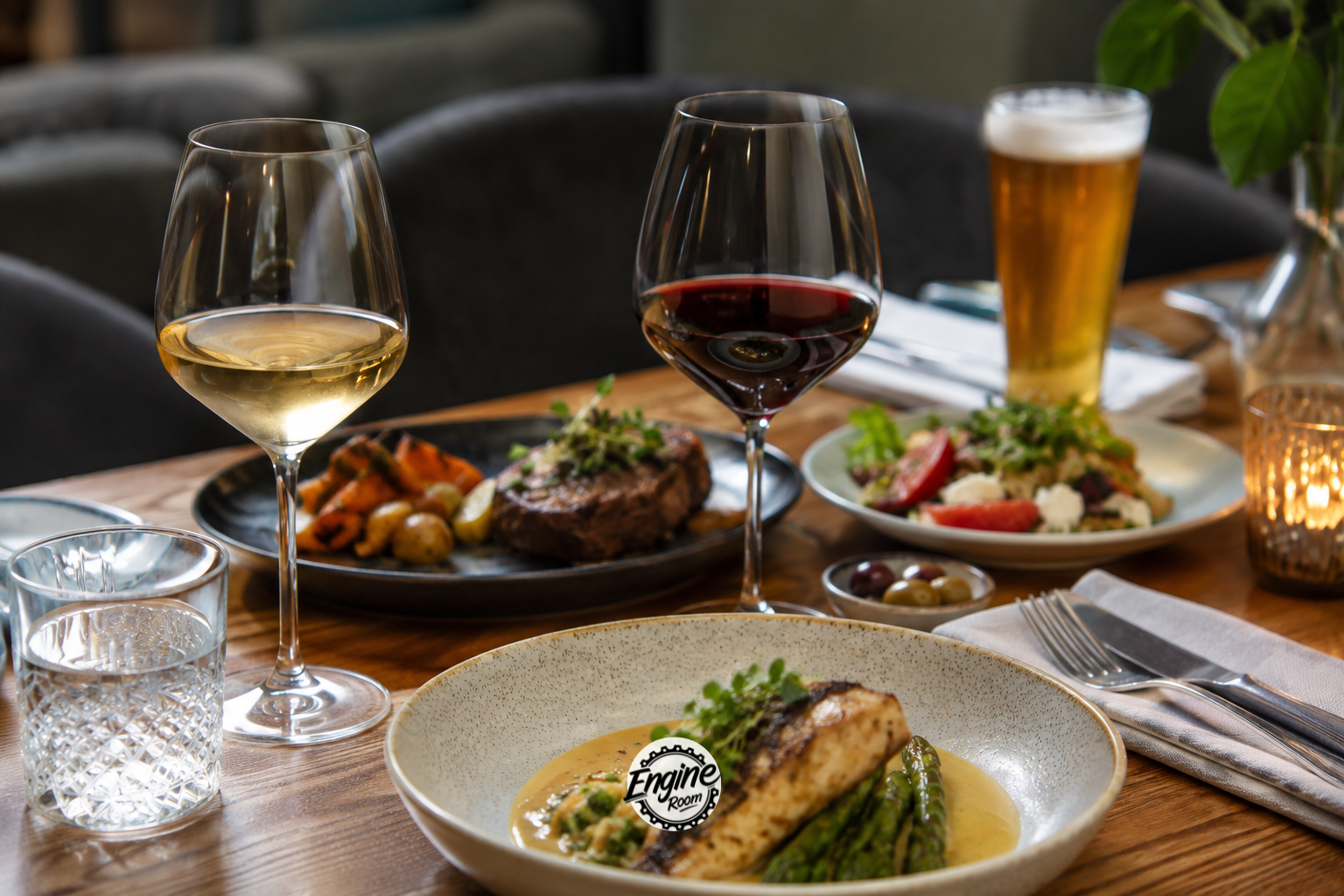
How to Match the Right Drink with Your Meal
Picking the right drink for your meal can turn a simple dinner into something special. The best pairings do more than just match flavors; they balance richness, refresh your palate, and make every bite feel intentional. Whether you’re planning a casual night out, a date, or a celebration, understanding food and drink pairings can enhance your dining experience. At Engine Room, where comforting food meets craft drinks, this balance is key.
This guide offers a practical approach to pairing food and drinks. You’ll learn how to match intensity, work with flavor profiles, draw from regional inspirations, and explore trends like functional beverages and bold sweet-salty combos. If you’re looking for a chill dinner spot with thoughtful pairings, check out our Downtown Salt Lake City location or enjoy our Central Ninth dining experience for a night filled with great food and drinks.
If you’re curious about the science of taste, Cornell University’s food research is a great place to start, especially to understand how aroma, acidity, and texture influence your perception. You can also check the FDA’s guidance on beverages and ingredients at the FDA Food resources for a broader view of product quality and labeling standards.
Why Drink Pairing Is Important
Creating Balance on Your Palate
The right drink can soften a rich dish, brighten a heavy sauce, or add contrast to a salty appetizer. A buttery burger needs something crisp to cut through the fat, while a delicate salad might be overwhelmed by a sweet or strong drink. Matching the drink to the dish keeps one flavor from overwhelming the other, making your meal smoother and more enjoyable.
Balance is especially important in places focused on bold flavors. At Engine Room, our menu is all about hearty, satisfying dishes, so the drink should enhance the experience. A well-chosen drink acts like another ingredient, shaping how you perceive the whole dish.
Enhancing Aroma, Texture, and Finish
Pairing isn’t just about taste. Aroma, carbonation, acidity, tannins, and temperature all influence how food feels as you eat it. A sparkling drink can refresh your mouth after a creamy bite, while a fuller-bodied drink can match the depth of a steak or smoky pizza. The finish matters too, as a lingering aftertaste should either complement the next bite or make room for it.
This is why meals feel more memorable with the right drink. The experience becomes layered instead of flat. According to taste studies from universities like Cornell University, sensory pairing can significantly enhance enjoyment, especially when aroma and taste align.
Start with the Dish: Reading the Flavor Profile
Spotting the Dominant Tastes
Before picking a drink, identify the main elements of your dish. Is it salty, sweet, spicy, smoky, acidic, rich, or herb-forward? A tomato-based pizza has acidity and savoriness, while a steak offers richness and umami. Once you know what the dish is doing, you can decide whether the drink should echo, contrast, or cleanse those flavors.
Ask yourself three questions: What’s the strongest flavor? What’s the heaviest texture? What should the drink do to your palate after each bite? These questions make pairing easier and less intimidating.
Match Intensity, Not Just Ingredients
One reliable rule in pairing is to match intensity. A light dish usually pairs well with a delicate drink, while a robust meal can handle a stronger beverage. This is a common principle in expert pairing guides like Alko’s food and drink pairing guide.
Think of it this way: a subtle dish can disappear next to a heavy drink, and a bold meal can make a light drink seem weak. When both sides match in weight and complexity, the pairing feels natural. This is especially useful for classic menu items like burgers, steaks, and pizza, where flavor intensity is already high.
Using Contrast and Complement to Build Better Pairings
Complementary Pairings Create Harmony
Complementary pairings work when the drink shares traits with the food. A smoky dish pairs well with a drink that has roasted, caramelized, or toasted notes. Creamy comfort food often benefits from something equally smooth, as shared qualities create a cohesive experience.
For instance, a rich steak and a full-bodied drink can feel luxurious together because both have depth. A dish with herbs and citrus may pair nicely with a bright drink that mirrors those notes. Complementing the food is a smart move when you want the meal to feel polished.
Contrasting Pairings Add Excitement
Contrast is just as powerful. A salty, crispy, or fatty dish can shine when paired with something acidic, sparkling, or lightly sweet. The contrast cuts through heaviness and refreshes your palate after each bite. That’s why fizzy drinks are popular with fried foods or tangy beverages with rich entrées.
Flavor trends suggest that people are more drawn to bold combinations, including sweet-salty fusions and comforting flavors. This trend gives diners more room to try surprising pairings. Coverage from FoodNavigator’s flavor trend reporting shows that adventurous combinations and flavor-forward drinks are gaining attention.
Trends Shaping Food and Beverage Pairing
Bold and Intense Flavors Are Popular
People are leaning into stronger, more expressive flavors. Instead of just following classic rules, diners are exploring sweet-salty, smoky-sweet, and spicy-cool combinations. This makes drink pairing more creative and personal, moving beyond tradition to overall enjoyment.
For restaurants and bars, this trend creates chances to build exciting pairings around comfort food. A burger with caramelized onions, a pizza with spicy sausage, or a steak with peppery seasoning can all support adventurous beverage choices. These combos are especially appealing in casual dining spaces where guests want familiarity with a twist.
Functional Beverages Are on the Rise
Functional drinks are gaining popularity. People are noticing beverages that offer energy, focus, relaxation, or other wellness benefits. Matcha is a strong example, showing an 87% rise in popularity and growth in fusion-style variations worldwide. That rise has brought matcha lattes, spritzes, and cocktails into the pairing conversation.
For those seeking non-alcoholic options, functional drinks can be a perfect fit. Herbal teas, sparkling botanical drinks, and matcha-based beverages can complement savory dishes without overpowering them. This trend also lets restaurants appeal to a wider audience, including diners who want non-alcoholic options that still feel special.
Global Flavors Drive Menu Innovation
Global influences are changing how people think about pairings. Flavors like ube, calamansi, coconut, pistachio, rose, and cardamom are appearing more often in drinks and desserts, expanding what pairings can look like. These ingredients bring regional authenticity and offer new ways to tell a story through flavor.
Diners respond to authenticity because when a drink and dish share regional or cultural roots, the pairing feels naturally connected. For more on how regional ingredients shape food culture, industry roundups like this 2026 flavor trend overview highlight the rise of globally inspired menus.
Practical Pairing Tips You Can Use
Match Rich Food with Structured Drinks
Rich, hearty foods need drinks with enough structure to keep up. A steak, loaded pizza, or creamy pasta can seem flat next to something too light, but a more robust option can enhance the dish. The goal isn’t to overpower the food; it’s to hold your own beside it.
In practical terms, consider body, acidity, and finish. A full-flavored drink can mirror a meal’s depth, while a drink with a crisp edge prevents your palate from feeling weighed down. This is why many guests enjoy premium craft beverages with a heavier dinner menu.
Use Acid or Bubbles to Refresh Your Palate
Acidity and carbonation are versatile pairing tools. They cut through fat, reset the palate, and prepare you for the next bite. If your dish is creamy, cheesy, fried, or buttery, a refreshing drink element keeps the meal lively from start to finish.
This rule works well with comfort food because many comfort dishes are naturally rich. The slight lift from acidity or bubbles keeps the overall experience from feeling too heavy. Even a simple meal feels more dynamic when the drink is chosen with intention.
Consider Sweetness Carefully
Sweetness is useful in pairing, but it should be used carefully. A drink that is too sweet can overwhelm savory food, but a touch of sweetness can bridge salty, spicy, and smoky notes nicely. This is especially true for dishes with a hint of caramelization or spice.
Sweet-salty pairings are popular because they’re satisfying and memorable. Think of a chili-accented cocktail with grilled dishes or a lightly sweet beverage with salty fries. The combo works because each element enhances the other without making the meal feel one-note.
Pairing Drinks with Common Menu Favorites
Burgers and Hearty Sandwiches
Burgers are forgiving but still benefit from thoughtful pairing. They often include fat, salt, smoke, and acidity from toppings, so they pair well with drinks that are crisp, moderately bold, and palate-cleansing. If the burger has strong flavors like bacon, onion jam, or blue cheese, the drink should be equally confident.
For those who enjoy creative pub fare, a relaxed spot like our Glendale location or Ballpark location is perfect to explore how burger pairings change with toppings, sauces, and sides. The best choice depends on whether the burger is classic, smoky, spicy, or extra rich.
Steaks and Grilled Entrées
Steak needs a beverage with enough backbone to support its richness and savory depth. Grilled meats often pair best with drinks that have some structure and a clean finish. If the steak includes peppercorn sauce, char, or herb butter, you can lean into those flavors with a bolder pairing strategy.
Regional pairing also works well here. Dishes and drinks from the same culinary tradition often share complementary flavor logic, which is why many diners instinctively prefer culturally aligned pairings. That idea is echoed in expert pairing guidance from Alko, where food intensity and origin influence harmony.
Pizza and Flatbreads
Pizza offers endless pairing possibilities because its flavor depends on sauce, cheese, crust, and toppings. A classic cheese pizza wants something bright and easygoing, while a pizza with spicy sausage or roasted vegetables may need more complexity. The crust also matters since a crisp, chewy base can support a different drink than a soft or heavily sauced one.
For pizza, identify the dominant note. Is it tomato acidity, melted cheese richness, or smoky char from the oven? Once you know the main flavor, picking a beverage that refreshes rather than competes becomes easier.
Building Better Pairing Experiences in Restaurants and Bars
Training Staff to Talk About Flavor
Pairing confidence starts with staff education. Servers and bartenders should know how to describe drinks in a way that helps guests make informed choices. Instead of just stating what’s on the menu, they should explain body, sweetness, acidity, and flavor intensity in plain language.
When staff can say, “This works well because it cuts through richness,” or “This is a great match because both share smoky notes,” guests feel guided rather than sold to. That kind of recommendation improves satisfaction and can naturally increase check averages.
Designing Menus that Encourage Experimentation
A great pairing menu doesn’t need to be complex. Even a few suggested combinations can help guests discover new favorites and feel more confident ordering. Seasonal pairings are effective because they highlight trending ingredients, local products, and functional beverage ideas without overwhelming the menu.
In a market like Salt Lake City, where locals and visitors enjoy casual dining, shared plates, and craft drinks, pairing menus create a reason to return. For businesses serving neighborhood guests, our Mill Creek location and North Salt Lake location show how a welcoming atmosphere supports repeat visits and relaxed experimentation.
Using Local Events to Showcase Pairings
Pairing events are a fun way to bring people together around flavor. A local brewery night, themed dinner, or chef-and-bartender collab can introduce guests to new combinations while building community. These events also let restaurants and bars highlight menu innovation and hospitality.
Local culinary events work well when they feature regional ingredients and seasonally inspired drinks. They create a sense of discovery that encourages guests to try something new, reinforcing that pairing is about experience, not rules.
Non-Alcoholic Pairings Deserve Attention Too
Herbal Teas and Botanical Drinks
Non-alcoholic pairing shouldn’t be an afterthought. Herbal teas, botanical sodas, sparkling juices, and matcha-based drinks can pair beautifully with food if selected carefully. Their flavor, acidity, and texture can support a meal just as effectively as an alcoholic beverage.
Matcha is a great example because it bridges savory and sweet categories. Matcha lattes can pair with dessert, while more restrained matcha drinks can complement lighter savory dishes. The rise of functional beverages means more diners are seeking these kinds of options.
Pairing for Every Guest at the Table
Offering non-alcoholic choices also makes the dining experience more inclusive. Not every guest wants alcohol, but everyone deserves a thoughtful pairing. When restaurants approach non-alcoholic options with the same care as cocktails or wine alternatives, the entire table benefits.
This matters in social dining settings, where a great beverage helps people feel part of the moment. A well-made non-alcoholic pairing should be refreshing, flavorful, and intentionally chosen to fit the meal rather than simply existing as a default option.
FAQs About Drink Pairing
How Do I Know Which Drink Pairs Best with My Meal?
Start with the dominant flavor of the dish, then match the drink’s intensity to the food. If the meal is rich, choose something with enough structure to balance it. If the dish is delicate, go lighter and fresher. Thinking in terms of weight, contrast, and finish will help you make a better choice every time.
Are Non-Alcoholic Drinks Good with Food?
Yes, absolutely. Herbal teas, sparkling beverages, matcha drinks, and botanical options can pair very well when their flavor profiles are considered carefully. The key is to avoid drinks that are overly sweet or too strong for the dish.
What If I Want to Try Global Flavors?
Global flavors can make pairings more interesting and authentic. Ingredients like calamansi, coconut, pistachio, rose, and cardamom add new layers to both food and drinks. The best results often come from pairing dishes and beverages that share a regional inspiration or a similar flavor family.
Bringing Pairing Into Your Next Night Out
Choose with Confidence
The perfect drink pairing doesn’t have to be complicated. Once you understand flavor balance, intensity, and contrast, you can choose with confidence and enjoy the meal more fully. Good pairings make food taste brighter, richer, and more memorable, which is why they are such an important part of the dining experience.
Make It Part of the Experience
At Engine Room, the mix of comforting food, craft drinks, and a lively atmosphere is designed to make every visit feel special. Whether you’re gathering with friends, planning a casual date, or trying a new menu combo, the right drink can elevate the whole night. If you’re ready to explore a better pairing experience, visit our Capitol Hill location and see how thoughtful food and beverage choices bring a meal to life.
For more information, reservations, or private event questions, contact Engine Room at (385) 261-2979 or gm@engineroompub.com. When you’re ready to pair your next meal with the perfect drink, we invite you to visit Engine Room and turn a good dinner into a great one.